Licensed U.S. retail desk60-day money-back windowUS shipping is free on 3 or 6 bottlesBest price: $49/bottle when you take 6 ($294)

Citrulline vs Arginine: How They Differ, and Why Some Formulas Use Both

Quick answer

Most citrulline becomes arginine in the kidneys, and some arginine becomes nitric oxide. For blood pressure, citrulline at 3 to 9 g a day has the clearer data; for exercise, neither has strong support; for memory, neither has evidence. Memodyne holds under 400 mg of arginine and under 200 mg of citrulline.

By the Memodyne Editorial DeskUpdated

Brand illustration of a ring of molecules, abstract art

Citrulline and arginine show up side by side in pre-workout tubs, blood flow formulas and, lately, focus capsules such as Memodyne. Search engines see the same question over and over: which one is better, and is there any point taking both?

We sell Memodyne, which lists both. Below is what public health sources say about each, where they differ, and where the popular answers go further than the evidence.

Citrulline vs arginine: which is better for nitric oxide?

Our sources do not crown either one. They describe a chain instead: about 80% of the body’s citrulline is turned into arginine in the kidneys, and some arginine is then converted into nitric oxide (NIH ODS, Dietary Supplements for Exercise and Athletic Performance (health professional)).

You will often read that citrulline is absorbed better than arginine and so raises nitric oxide more. None of the pages we opened says that, so we cannot confirm it. What they do show is narrower: for blood pressure, the citrulline numbers are clearer, and for exercise, neither has strong support.

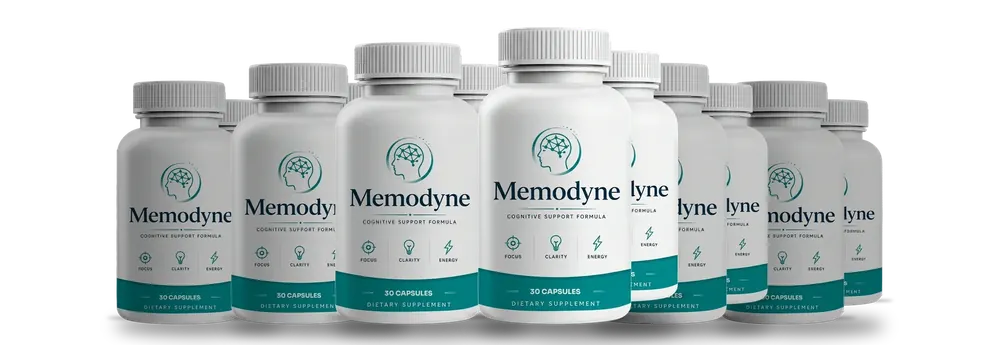
Memodyne bottles

Want the lowest Memodyne price? It comes with the 6-bottle pack.

Best price: $49/bottle when you take 6 ($294). Free shipping on 3+ · 60-day money-back window · Checkout by BuyGoods.

Check today’s price

What are arginine and citrulline, and what has each been studied for?

Turn each sheet over to see the doses studied, the findings and what to watch for. The back of each card also shows how much is in one Memodyne capsule.

Brand illustration of a ring of molecules, abstract art

Amino acid

L-arginine

Studied in grams a day

The direct precursor. Some of it becomes nitric oxide, which widens blood vessels.

L-arginine: the research

Studied at
2 to 20 g a day for exercise; 4 to 24 g for blood pressure; 5 g for erectile function
What studies found
Little to no exercise effect; small blood pressure changes; might help erectile problems with a physical cause
Watch for
Several medicine interactions and heart attack history; see the check at the end
In Memodyne
200 mg base plus 200 mg of the AKG salt, so under 400 mg of arginine
Full L-arginine page
Brand illustration of a molecule chain, abstract art

Amino acid

L-citrulline

Studied in grams a day

The indirect route. The kidneys turn most of it into arginine first.

L-citrulline: the research

Studied at
3 to 9 g a day for blood pressure; 8 g citrulline malate before exercise tests
What studies found
Systolic pressure about 4 mm Hg lower; diastolic only at 6 g or more; no strong exercise support
Watch for
Medicine interactions, covered in the check at the end; WebMD advises against it in pregnancy or breastfeeding
In Memodyne
100 mg HCl salt plus 100 mg malate salt, so under 200 mg of citrulline
Full L-citrulline page

Sources: (NIH ODS, Dietary Supplements for Exercise and Athletic Performance (health professional)) (RxList, L-Arginine (supplement monograph)) (Avicenna J Phytomed 2019, Barkhidarian et al., L-citrulline and blood pressure meta-analysis) (WebMD, L-citrulline: Uses and Risks). The images are abstract brand art, not real molecular drawings.

How do citrulline and arginine compare, outcome by outcome?

On blood pressure, citrulline has the tidier data; on exercise, both fall short; on memory, neither has any. The table puts the sources side by side.

Arginine and citrulline compared, using the sources cited on this page
QuestionL-arginineL-citrulline
How it reaches nitric oxideSome is converted directlyMostly becomes arginine in the kidneys first
Blood pressureSome research shows it can lower it in healthy people (Mayo); small changes (WebMD)About 4 mm Hg off systolic at 3 to 9 g a day
ExerciseLittle to no effect at 2 to 20 gResearch does not strongly support it
Erectile functionMight help when the cause is physicalMay ease mild cases, but works less well than Viagra
Common side effectsNausea, stomach pain, diarrhea, bloatingNone reported by WebMD; stomach upset in 6 of 41 weightlifters in one study
Safety dataUp to 9 g a day for days or weeksUp to 6 g a day for 4 weeks
MemoryInsufficient evidence to rateAn early hint for some dementias, no details

Sources: (Mayo Clinic, L-arginine) (WebMD, L-Arginine) (WebMD, L-citrulline: Uses and Risks) (NIH ODS, Dietary Supplements for Exercise and Athletic Performance (health professional)) (RxList, L-Arginine (supplement monograph)).

What is the difference between HCl, AKG and malate forms?

They are salts: the amino acid bound to a partner compound. That partner adds weight, so a 100 mg salt holds less than 100 mg of the amino acid itself.

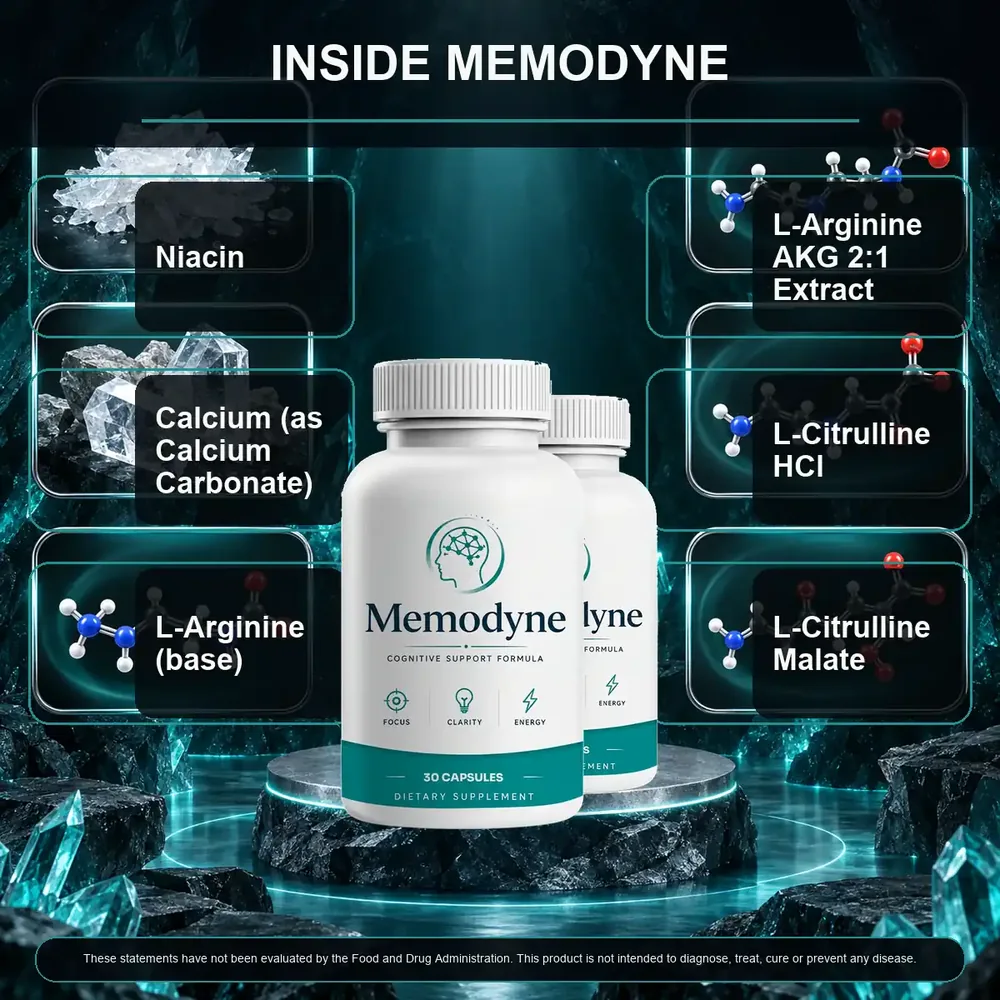
Brand graphic titled Inside Memodyne, with ingredient names around two bottles
The brand’s ingredient graphic names both arginine forms and both citrulline forms. It leaves out beta alanine, which the label lists.

Arginine AKG 2:1

Arginine bound to alpha-ketoglutarate, often sold as AAKG. It is not a second supplement added on top, and it is not creatine AKG. We found no authoritative page on AAKG itself, so treat it as arginine for safety.

Citrulline HCl and citrulline malate

Two salts of the same amino acid. Malate is citrulline bound to malic acid; exercise studies used 8 g of it before testing (NIH ODS, Dietary Supplements for Exercise and Athletic Performance (health professional)). Neither form has a known memory effect.

Why would a formula use citrulline and arginine together?

The brand gives its reasons, and they are claims, not findings. Its sales page calls citrulline a precursor the body recycles back into arginine, creating a continuous cycle of nitric oxide production. It says the AKG form improves absorption and stretches the vessel-widening effect through the day.

We could not find a source that tests either line, or any study of the two amino acids combined at these amounts. The pairing is common in exercise products, and the NIH notes that many of those mix several ingredients at once (NIH ODS, Dietary Supplements for Exercise and Athletic Performance (health professional)).

How much citrulline and arginine is in Memodyne?

Under 400 mg of arginine and under 200 mg of citrulline, once the salt partners are taken out. Set against the lowest doses in the research, that is about one fifth of 2 g of arginine and about one fifteenth of 3 g of citrulline.

The blood pressure meta-analysis found a diastolic change only at 6 g of citrulline or more (Avicenna J Phytomed 2019, Barkhidarian et al., L-citrulline and blood pressure meta-analysis). One capsule is a long way from that. The exact arginine share of the AKG salt is not published, so we do not calculate it. The full label is on our Memodyne Supplement Facts page.

Is it safe to take citrulline and arginine with your medicines?

Not always. Both carry interaction warnings even though no source sets a safe amount. Answer these four questions before you try either one.

Arginine and citrulline medicine check

  1. Do you take a nitrate such as nitroglycerin, or sildenafil, tadalafil or vardenafil?

  2. Do you take any medicine for blood pressure?

  3. Have you had a heart attack recently?

  4. Do you take medicine for diabetes?

Answer every question to see your result. Nothing is saved or sent.

Sources: (Mayo Clinic, L-arginine) (WebMD, L-citrulline: Uses and Risks) (RxList, L-Arginine (supplement monograph)) (JAMA 2006, Schulman et al., L-arginine after heart attack (VINTAGE MI)).

Questions about citrulline and arginine

Citrulline vs arginine: which is better?

It depends on the goal. For blood pressure, citrulline has a clearer meta-analysis at 3 to 9 g a day; for exercise, neither has strong support; for memory, neither has evidence.

Is citrulline or arginine better for nitric oxide?

Our sources do not rank them. Most citrulline becomes arginine in the kidneys, and some arginine becomes nitric oxide.

Can you take citrulline and arginine together?

Many products combine them, but no source we opened studied the pair at capsule amounts. The medicine cautions apply to both.

What is L-arginine AKG compared with plain L-arginine?

AKG is arginine bound to alpha-ketoglutarate, so 200 mg of it holds less than 200 mg of arginine.

Citrulline malate vs L-citrulline: which is better?

They are forms of the same amino acid. Malate is bound to malic acid, so it carries less citrulline by weight.

What are the side effects of citrulline and arginine?

Arginine can cause nausea, stomach pain, diarrhea and bloating. WebMD reports no side effects for citrulline, though one study saw stomach upset.

Will citrulline keep me awake?

None of our sources lists sleeplessness for citrulline, and the Memodyne label lists no caffeine or other stimulant.

Does Memodyne have enough citrulline to matter?

Not for anything studied. It has under 200 mg, while blood pressure trials used 3 to 9 g a day.

Page check

Written by

Memodyne Editorial Desk

Compares each label amount with the doses used in published research, using NIH, FDA and Alzheimer's Association pages.

Reviewed by

Dr. Harald Hampel, MD, PhD, MD, Physician

Medical reviewer. Review date: October 13, 2026.

  • Last compared with the label: October 13, 2026
  • Facts come from the Supplement Facts panel and the brand pages; health lines come from the sources linked above
  • Corrections go to [email protected]; our checking rules are on the standards page