L-Arginine AKG 2:1 in Memodyne: A Bound Form With No Research of Its Own
Quick answer
L-arginine AKG 2:1 is arginine bound to alpha-ketoglutarate, often sold as AAKG. Memodyne lists 200 mg, but part of that weight is AKG, so it gives less than 200 mg of arginine. No authoritative source we opened covers this form, and the brand's claim that it absorbs better and lasts all day has no study behind it.

What is L-arginine AKG 2:1, and why does Memodyne list it?
It is arginine alpha-ketoglutarate, often sold as AAKG: the amino acid L-arginine joined to a second compound, alpha-ketoglutarate (AKG). It is one ingredient, not arginine plus a separate AKG supplement.
Memodyne lists it at 200 mg per capsule, right beside 200 mg of plain L-arginine base. The label does not say why the formula uses both forms, and the brand's only reason is a sales line we check further down.
What about the AKG half by itself? We found no authoritative source on alpha-ketoglutarate taken alone, so we do not describe what it does in the body.
What does "2:1" mean on the Memodyne label?
It is a ratio describing how the two parts are combined. The label prints it without a definition, and none of the sources we opened explains it, so we do not turn it into a milligram split.
One thing holds whatever the split: the 200 mg is the weight of the combined compound. Some of it is AKG, so this line gives you less than 200 mg of arginine. Follow the arithmetic:
- 1
The label line
L-arginine AKG 2:1 extract, 200 mg.
- 2
Two parts, one powder
Arginine and alpha-ketoglutarate share that weight.
- 3
Arginine from this line
Under 200 mg; the exact figure is not published.
- 4
Add the base line
Under 400 mg of arginine per capsule in total.
- 5
Compare
Studies of arginine used 2 to 24 g a day.
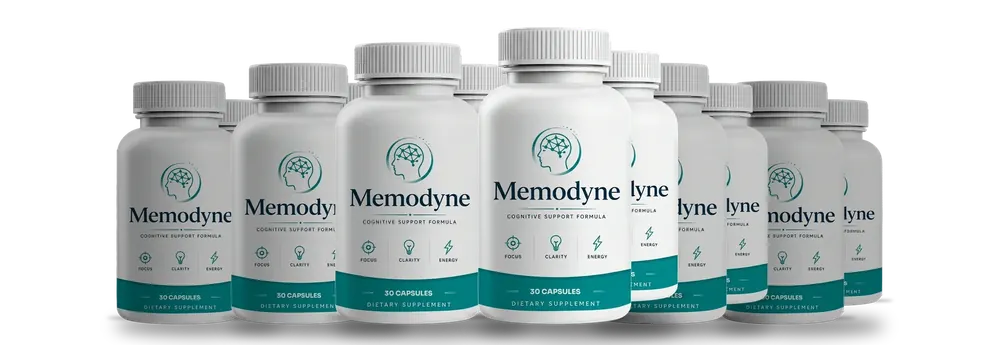
Want the lowest Memodyne price? It comes with the 6-bottle pack.
Best price: $49/bottle when you take 6 ($294). Free shipping on 3+ · 60-day money-back window · Checkout by BuyGoods.
Is there research on arginine AKG?
Not that we could use. No authoritative consumer or clinical page we opened covers arginine alpha-ketoglutarate itself. The arginine pages from Mayo Clinic, Memorial Sloan Kettering, WebMD, RxList and the NIH discuss plain L-arginine only.
| Source we opened | Covers L-arginine? | Covers arginine AKG? |
|---|---|---|
| Mayo Clinic, L-arginine | Yes | No |
| Memorial Sloan Kettering, Arginine | Yes | No |
| WebMD and RxList monographs | Yes | No |
| NIH Office of Dietary Supplements, exercise sheet | Yes, 2 to 20 g a day | No; it names creatine AKG, a different product |
| MedlinePlus | No entry available | No |
One exercise trial in trained men, published in 2006, does appear in research indexes. We could see only its citation, not its results, so we report nothing about what it found. It was not a memory or focus study.
So there is no AAKG study to set against the label, for memory or anything else. When we compare doses, we fold this line into the arginine total and use the plain arginine research.
Does arginine AKG improve absorption or make the effect last all day?
Nothing we found supports it. The Memodyne sales page says the bound form improves absorption and extends the vasodilating effect throughout the day, but it names no study, and we found none.
- Marketing only
An advanced form of arginine bound to alpha-ketoglutarate
Sales pageBound, yes. Advanced is undefined; no comparison with plain arginine is shown.
- Marketing only
improves absorption and extends the vasodilating effect throughout the day
Sales pageNo absorption figures, no timing data and no trial are given anywhere.
- On the label
L-arginine AKG 2:1 Extract, 200 mg
Supplement Facts panelThe one checkable fact: the weight of the combined compound.
- Not shown
A study comparing AAKG with plain arginine
Not shown by the brandThe "Scientific References" strip on the sales page is a row of logos with no studies listed.
The FTC says a health claim needs competent and reliable scientific evidence, and that the dose and formula studied should match the product (FTC, Health Products Compliance Guidance). A claim with no study behind it falls short of that.
What would support the claim? A trial giving people AAKG and plain arginine at matched doses, measuring arginine in the blood across a day, and reporting both results. We found nothing like that for AAKG, at 200 mg or at any other amount, and the brand does not point to one.
How does 200 mg of arginine AKG compare with study doses?
It is a small slice of a small total. Even counted at full weight with the base line, the arginine in a capsule is under 400 mg.
Exercise research used 2 to 20 g of arginine a day and found little to no effect on performance (NIH ODS, Dietary Supplements for Exercise and Athletic Performance (health professional)). Blood pressure studies started at 4 g (RxList, L-Arginine (supplement monograph)). The whole ingredient list shows the same gap for citrulline and beta alanine.
Is arginine AKG the same as creatine AKG or agmatine?
No. Several supplement names sound alike, and only one of them is on this label.
| Name | What it is | On the Memodyne label? |
|---|---|---|
| L-arginine AKG 2:1 (AAKG) | Arginine bound to alpha-ketoglutarate | Yes, 200 mg |
| L-arginine (base) | Plain arginine | Yes, 200 mg |
| L-arginine HCl | Arginine as a hydrochloride salt | No |
| Creatine AKG | Creatine bound to AKG; a different product | No |
| Agmatine | A different compound with a similar name | No |
| Arginine silicate | A company-branded compound, a different product | No |
None of the arginine research on our pages applies to agmatine or arginine silicate, and none of the creatine research applies to AAKG. People also compare AKG with the HCl form; since neither form has a study against the other in our sources, the label weight is the only number to go on.
Is arginine AKG safe to take?
Treat it as arginine. With no page of its own, the sensible reading is that every arginine caution applies to this line too.
- Medicines that lower blood pressure. Nitrates, sildenafil-type pills and blood pressure drugs may stack with arginine and push pressure too low; arginine may also lower blood sugar on diabetes medicine (Mayo Clinic, L-arginine).
- A recent heart attack. Mayo Clinic does not recommend arginine (Mayo Clinic, L-arginine), and one trial saw more deaths on it (JAMA 2006, Schulman et al., L-arginine after heart attack (VINTAGE MI)).
- Pregnant, nursing or under 18. The label says to ask a physician before use.
Full details, including the cold sore question, are on the L-arginine page and the side effects page.
Arginine AKG: short answers
What is L-arginine AKG?
Arginine alpha-ketoglutarate, also called AAKG: L-arginine bound to alpha-ketoglutarate in one compound.
What does 2:1 mean in arginine AKG 2:1?
It describes how the two parts are combined. The label does not define it and our sources do not either, so we do not turn it into a milligram split.
How much arginine does the AKG line in Memodyne give?
Less than 200 mg, because part of the 200 mg is alpha-ketoglutarate. Together with the base line, under 400 mg.
Is L-arginine AKG better than plain L-arginine?
No source we opened shows that. The brand says it absorbs better and lasts longer, but cites no study.
Is arginine AKG good for memory or focus?
We found no study of AAKG for memory or focus, and no authoritative page about AAKG at all.
Is arginine AKG the same as creatine AKG?
No. Creatine AKG is a different product. Memodyne contains arginine AKG and no creatine.
Does Memodyne contain alpha-ketoglutarate on its own?
Not as a separate line. The AKG is bound to arginine inside the 200 mg line, and we found no authoritative source on AKG taken alone.
Can I take arginine AKG with blood pressure or erectile dysfunction medicine?
Ask your doctor first. Treat it like L-arginine, which can stack with those medicines and lower blood pressure too far.
Page check
Written by
Compares each label amount with the doses used in published research, using NIH, FDA and Alzheimer's Association pages.
Reviewed by
Dr. Harald Hampel, MD, PhD, MD, Physician
Medical reviewer. Review date: October 13, 2026.
- Last compared with the label: October 13, 2026
- Facts come from the Supplement Facts panel and the brand pages; health lines come from the sources linked above
- Corrections go to [email protected]; our checking rules are on the standards page