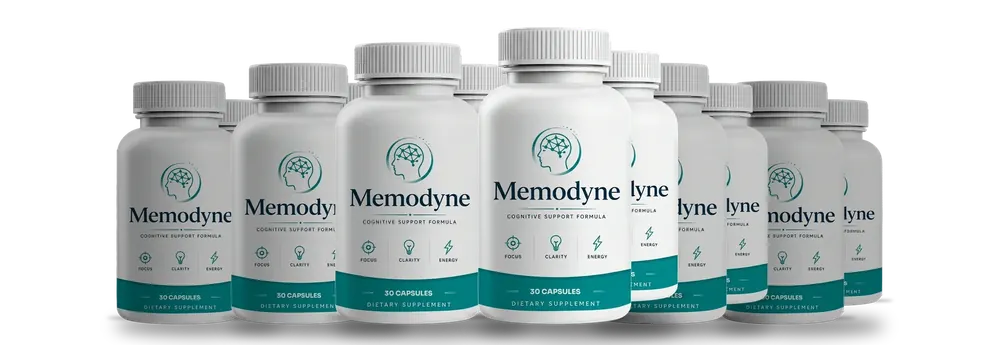
Editorial Standards: How Every Memodyne Page Is Checked
Quick answer
Every Memodyne fact here starts on the bottle label, then the brand's pages, then government and clinical sources. Doses are compared in the same unit, both forms of an amino acid are added, salt forms count as an upper limit, missing facts say "not published", and unverified reviews are never shown.
Which sources decide what a Memodyne page says?
A fixed ladder settles which source wins. For what is inside the capsule, the label outranks everything. For health questions, a government page outranks a company page every time.
| Level | Covers | Our use |
|---|---|---|
| 1. The printed label | Amounts, serving, directions, caution, other ingredients, distributor | Settles any dispute about what the capsule holds. |
| 2. Our seller pack | Our role, office, order desk, return address, lot and CoA labels | Only facts about us. Its sample reviews, scores and suggested reviewer are dropped. |
| 3. The brand's pages | Prices, bonuses, refund wording, terms, contact lines | memodyne.com and its linked policy pages, opened on October 13, 2026 and read again at each update. |
| 4. Government agencies | NIH (ODS, NCCIH, NIA), FDA, FTC | First choice for any health, label-law or advertising statement. |
| 5. Clinical and non-profit experts | Mayo Clinic, Memorial Sloan Kettering, Linus Pauling Institute, Alzheimer's Association, the GCBH panel | Used with their dates; the GCBH report is from 2019. |
| 6. Journals and societies | A citrulline blood pressure meta-analysis, the VINTAGE MI trial, the ISSN beta alanine position stand, one beta alanine trial in older adults | Shown with their limits: small trials, industry funding, gram doses. |
| 7. Commercial drug references | WebMD, RxList | Support only. A caution found only there is worded as "one drug-information source". |
| Never used as evidence | Paid releases, affiliate "review" posts, copycat "official" domains, unmatched star scores | Marketing, whatever they claim. |
Each listed source was opened before we cited it. Pages that failed to load are noted as failures, never quoted.
How do we compare a label amount with a dose from research?
With six fixed rules, so every page does the arithmetic the same way. The FTC tells advertisers to ask how their dose and formula compare with the one studied (FTC, Health Products Compliance Guidance); we apply the same test from the buyer's side.
| Rule | What it means | On the Memodyne label |
|---|---|---|
| Put both in the same unit | Studies report grams; the label prints milligrams. 1 g is 1,000 mg. | A 4 g blood pressure dose is 4,000 mg. |
| Add the forms of one amino acid | Two label lines can carry the same amino acid, so we add them before comparing. | Arginine 200 mg + arginine AKG 200 mg = 400 mg. Citrulline HCl 100 mg + malate 100 mg = 200 mg. |
| Treat a salt form as a ceiling | AKG, HCl and malate add weight that is not the amino acid itself. | Real arginine is under 400 mg and real citrulline under 200 mg. No source gives the exact share, so we never print one. |
| Compare with the lowest studied dose | We use the low end of the range a source reports, which favors the product. | 400 mg is one-tenth of 4 g; 200 mg of citrulline is about one-fifteenth of 3 g; 40 mg of beta alanine is 1% of 4 g. |
| Judge nutrients by daily need | Vitamins and minerals are compared with the RDA or Daily Value, not with a trial. | Niacin 7.5 mg NE is about half the 14 to 16 mg NE adults need. Calcium 18 mg is quoted at the printed 1.5% DV. |
| Keep arithmetic separate from advice | A small dose is not proof of safety or of uselessness. | Cautions about arginine with heart and blood pressure medicines stay on the safety pages at any amount. |
The result, drawn to scale
Label: under 400 mg. Studied: 4 to 24 g a day in blood pressure studies. (RxList, L-Arginine (supplement monograph)) (Memorial Sloan Kettering, Arginine (About Herbs))
Label: under 200 mg. Studied: 3 to 9 g a day in blood pressure trials. (Avicenna J Phytomed 2019, Barkhidarian et al., L-citrulline and blood pressure meta-analysis) (NIH ODS, Dietary Supplements for Exercise and Athletic Performance (health professional))
Label: 40 mg. Studied: 4 to 6 g a day in exercise studies. (ISSN position stand: Beta-Alanine (2015)) (NIH ODS, Dietary Supplements for Exercise and Athletic Performance (health professional))
Label: 7.5 mg NE. Studied: 14 to 16 mg NE a day adult need (RDA). (NIH ODS, Niacin (health professional))
Label: 18 mg. Studied: 1,000 to 1,200 mg a day adult need. (NIH ODS, Calcium (health professional))
The two salt forms of citrulline are the same amino acid, not two different ingredients. Why a formula might pair them, and how citrulline turns into arginine, is on the citrulline vs arginine post. The full panel is on the Memodyne supplement facts page.
What does "not published" mean on our pages?
The fact was absent from the bottle, from every brand page we opened and from our seller pack. We leave such gaps empty rather than estimate.
- The manufacturer's name (the label names only a distributor, Gex Corporation LLP)
- One clear return rule (unconditional vs sealed bottles only with a 20% restocking fee vs all bottles back)
- Any study of the formula, or any study linking these amounts to memory
- The studies behind the "Scientific References" logos
- The shipping carrier
- A public lab report (certificate of analysis) for any lot
- Verified customer reviews
Lot MEM-26/ME-6411 and certificate number MEM-6411-26-ME, from our seller pack, help the order desk match an order. Neither is a lab result.
Which Memodyne claims will you never see repeated here?
The sales copy goes far beyond the label. We report those lines as the brand's words, never as facts.
- That it improves, boosts or restores memory, focus or recall.
- That it prevents, slows or treats dementia, Alzheimer's disease or brain fog.
- That it raises nitric oxide in the brain or increases blood flow to the brain.
- That it supports neurotransmitter production or protects neurons.
- That it is clinically proven, doctor formulated or FDA approved.
What we write instead: the label says "cognitive support", the ingredients were "studied for" blood pressure or exercise, and the product is "sold for" focus, clarity and energy.
Why do some boxes show highlighted blanks?
Three things must come from real people: the medical reviewer, customer reviews and the rating. Until each one is real, it appears as a highlighted blank.
- Reviewer: name, credentials and date stay blank until a licensed clinician has read the pages.
- Reviews: a card fills in only after the order desk matches its writer to an order.
- Rating: calculated only from matched reviews, never copied from a seller document.
Our seller pack came with sample reviews, a score and order counts. We do not show, count or paraphrase any of it, because none could be checked. The empty slots are on the Memodyne reviews page.
Does earning from orders bend our verdict?
Memodynefocus is paid when you order through our buttons; your checkout price does not change. That income could tempt us to go easy, so four rules push back.
- The dose gap, the missing memory studies and the refund conflicts stay on every page where they matter.
- Order buttons state real terms only: a 60-day refund window, free US shipping on 3 or 6 bottles, and a one-time order.
- No countdown clocks or stock counters, which the FTC lists as dark patterns (FTC, Report on dark patterns (press release)).
- Buy links are marked as sponsored in the page code.
How are mistakes fixed, and what has changed so far?
Send the page address and the sentence you doubt to [email protected]. We check it against the source, fix the page if it is wrong and add a dated line to this log, without your name.
- Oct 11-13
Health sources opened
NIH, FDA, FTC, Mayo Clinic, Alzheimer's Association and journal pages were opened and summarized. Several pages reused from earlier work were opened again on October 13.
- Oct 13
Label and brand pages read
The label was copied line by line. The home page, its FAQ page, both order pages, the bonus pages, the upsell pages and every linked policy page were opened.
- Oct 13
Dose arithmetic set
Each label line was matched with the doses its sources report, using the six rules above.
- Each update
Prices and policies re-read
Pack prices, refund wording and contact lines are compared with the live brand pages before a page changes.
- When it happens
Medical review switched on
The reviewer's name, credentials and date fill in on every page at the same time.
Who runs the site and who will review it is on the about Memodynefocus page.
Questions about how we check
Where does a Memodyne fact on this site start?
With the printed bottle label. Brand pages come next for prices and policies, and government or clinical sources cover anything about health.
Why do you add arginine and arginine AKG together?
Both lines supply arginine, so a fair comparison with a study dose counts them as one. The total, 400 mg, is still an upper limit because AKG is part of the weight.
Why not work out the exact arginine in the AKG form?
None of our sources gives the arginine share of arginine AKG 2:1, and a computed number would look more certain than it is. We say "under 400 mg" instead.
Is a milligram dose always weaker than a gram dose?
Not for every substance, but for these amino acids the studies we found used grams a day. That is why we show the gap rather than borrow their results.
Why does the calcium line say 1.5% DV when 18 mg of 1,300 mg is less?
We quote the label as printed. The small difference does not change anything for a buyer, and changing it would mean the page no longer matches the bottle.
Do sponsored Memodyne review sites count as sources?
No. Paid placements, affiliate review posts and lookalike sites are marketing. We describe them on the trust pages but never cite them as proof.
How quickly is a reported error corrected?
We check the report against the source and fix the page in the next update, with a note in the log. Send it to [email protected].
Page check
Written by
Compares each label amount with the doses used in published research, using NIH, FDA and Alzheimer's Association pages.
Reviewed by
Dr. Harald Hampel, MD, PhD, MD, Physician
Medical reviewer. Review date: October 13, 2026.
- Last compared with the label: October 13, 2026
- Facts come from the Supplement Facts panel and the brand pages; health lines come from the sources linked above
- Corrections go to [email protected]; our checking rules are on the standards page