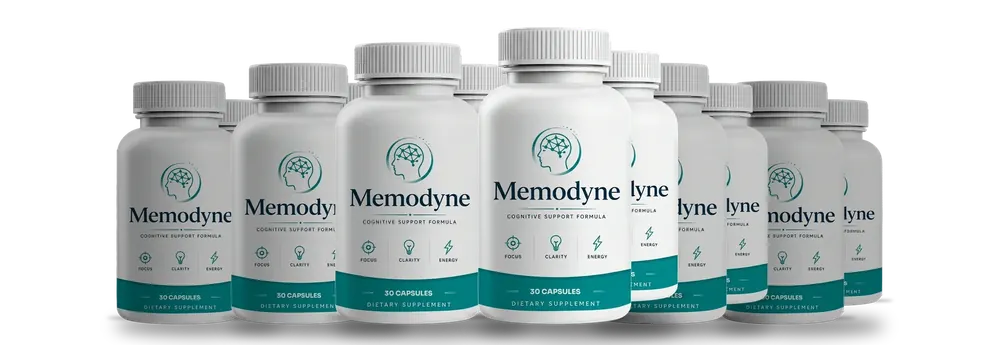
Disclaimer: What memodynefocus.com Can and Cannot Tell You
Quick answer
memodynefocus.com is an information site and retail desk, not a medical service and not the maker. Memodyne is a dietary supplement, not a drug, and not a treatment for memory loss or dementia. No study of the formula exists. Talk to your doctor before starting it, and always about memory changes that worry you.
What is memodynefocus.com, and what is it not?
It is an information site and retail desk run by Memodynefocus. It explains what the Memodyne label says, what the brand's pages claim and what public health sources say about the ingredients.
It is not a medical service, not the maker of Memodyne and not a substitute for your doctor. Nothing here is meant to diagnose, treat or prevent any disease, and reading it does not create a doctor-patient relationship.
Is Memodyne a medicine?
No. Memodyne is a dietary supplement. The FDA does not approve supplements for safety or effectiveness before they are sold (FDA, FDA 101: Dietary Supplements), and the bottle carries the required statement: "These statements have not been evaluated by the Food and Drug Administration. This product is not intended to diagnose, treat, cure or prevent any disease."
"Cognitive support" is a structure/function phrase, the kind a supplement may print without FDA review (FDA, Structure/Function Claims). On memory, the Alzheimer's Association says no supplement has been proven to prevent, treat or cure Alzheimer's disease (Alzheimer's Association, Alternative Treatments), and an AARP-convened expert panel found no supplement shown to slow cognitive decline (Global Council on Brain Health (AARP), The Real Deal on Brain Health Supplements).
Which Memodyne claims does this site not stand behind?
The brand's sales copy goes well past its label. Here is each line, where it appears and how we treat it.
- On the label
COGNITIVE SUPPORT FORMULA
Front of the bottleWe repeat it only as the label's own words. The asterisk leads to the statement that the FDA has not evaluated it.
- Marketing only
directly targets the real causes of memory loss
memodyne.com sales pageNo source we opened links any of these ingredients, at any amount, to better memory.
- Marketing only
selected for its ability to increase cerebral blood flow
memodyne.com sales pageArginine and citrulline studies measured blood pressure and exercise, at grams a day, not blood flow to the brain.
- Not shown
Scientific References
Logo strip on the sales pageJournal and newspaper logos with no study, author, year or link, and a footer saying none of them is affiliated.
- Not shown
Doctor Formulated
Seal in the brand's imagesNo doctor is named anywhere on the label or the brand's pages.
- Marketing only
no significant side effects have been reported
The brand's FAQNo safety study of the finished product is published, so there is nothing to check this against.
How we weigh claims against sources, and why some boxes stay blank, is on our editorial standards page.
Does your memory or focus worry need a doctor rather than a supplement?
Answer four questions. Nothing is saved or sent. The signs come from the National Institute on Aging (NIA, Forgetfulness: Knowing When to Ask for Help) and the Alzheimer's Association (Alzheimer's Association, 10 Early Signs).
Doctor first, or not?
Has forgetting started to get in the way of daily tasks, bills or appointments?
Have you got lost somewhere familiar, or felt confused about the time or place?
Has a relative or friend said your memory is getting worse?
Do you struggle to find words much more than other people your age?
Answer every question to see your result. Nothing is saved or sent.
No warning sign in your answers. Forgetting a name now and then and remembering it later is typical with age. If that changes, talk to your doctor.
Book a visit with your doctor. Many causes of memory trouble, such as medicine side effects, low vitamin B12 or thyroid problems, can be treated, and taking a supplement instead can delay finding them.
Talk to your doctor before starting Memodyne, and bring the label with you.
Who needs a doctor's advice before taking Memodyne?
These four situations come up across our sources. None of them sets a safe amount, so the caution applies to small doses too.
| If this applies to you | Why it matters |
|---|---|
| You take blood pressure medicine, a nitrate or an ED drug such as sildenafil | Arginine may lower blood pressure further, possibly too far (Mayo Clinic, L-arginine) |
| You have had a recent heart attack | More people died on arginine than on placebo in a post-heart-attack trial (JAMA 2006, Schulman et al., L-arginine after heart attack (VINTAGE MI)) |
| You are pregnant or nursing, or under 18 | The label itself says to consult a physician before use |
| You get cold sores | One drug-information source says arginine might make herpes worse (RxList, L-Arginine (supplement monograph)) |
The full list of reported effects and medicine interactions is on the Memodyne side effects page.
What does help memory and focus?

Habits, mostly. Mayo Clinic lists physical activity, mental activity, time with other people, staying organized, good sleep, a diet rich in fruit, vegetables and whole grains, and keeping health conditions under control (Mayo Clinic, Memory loss: 7 tips to improve your memory).
The GCBH panel gives similar advice: get nutrients from food, save your money and build healthy habits. Our memory and focus guide goes through each one.
Results, reviews, prices and outside links
- Results: no trial of Memodyne exists, so no result can be promised. Any timeline you see online was not measured.
- Testimonials: the brand's sales page shows testimonials we could not verify. Our own review boxes stay blank until each writer is matched to an order; see the Memodyne reviews page.
- Prices: copied from the brand's order pages and checked at each update. The checkout total is final.
- Links: we do not control other sites, and their pages can change after we read them.
- Earnings: Memodynefocus is paid for orders placed through our buttons, at no extra cost to you.
Disclaimer: quick answers
Is memodynefocus.com giving me medical advice?
No. The pages summarize the label and public health sources for adults in general. Your own doctor or pharmacist should decide what is right for you.
Can Memodyne treat memory loss or dementia?
No. It is a dietary supplement, not a drug, and no supplement has been proven to prevent, treat or cure Alzheimer's disease.
Is Memodyne clinically proven?
No. We found no study of the finished formula, and none linking its ingredients to better memory or focus.
Why does the Memodyne bottle say the FDA has not evaluated it?
Supplements may make structure/function claims such as "cognitive support" without FDA review, and the law requires that statement next to them.
Are the testimonials on the Memodyne sales page real?
We could not verify them, and the brand's own disclaimer says names may be changed and results are not typical. We do not repeat them.
Do you earn money if I order?
Yes, from orders placed through our buttons. The checkout price is the same, and the weak points stay on our pages either way.
Should I stop a prescribed medicine to try this?
Never. Keep taking what your doctor prescribed, and show them the label before adding any supplement.
Who is responsible for the sites you link to?
Their owners. Health sources, the brand's pages and the checkout are outside our control, and their content can change after we check it.
Page check
Written by
Compares each label amount with the doses used in published research, using NIH, FDA and Alzheimer's Association pages.
Reviewed by
Dr. Harald Hampel, MD, PhD, MD, Physician
Medical reviewer. Review date: October 13, 2026.
- Last compared with the label: October 13, 2026
- Facts come from the Supplement Facts panel and the brand pages; health lines come from the sources linked above
- Corrections go to [email protected]; our checking rules are on the standards page