Nitric Oxide Explained: What Arginine and Citrulline Do, and What They Don’t
Quick answer
Nitric oxide is a molecule the body makes that widens blood vessels. Some arginine becomes nitric oxide, and citrulline mostly becomes arginine. Studies used 2 to 24 g a day and measured blood pressure and exercise, not memory. Memodyne holds under 400 mg of arginine and under 200 mg of citrulline. Avoid mixing with nitrates or sildenafil.

Nitric oxide sits at the center of the Memodyne sales pitch. The brand says its amino acids raise it, that it opens blood vessels in the brain, and that sharper thinking follows. This guide takes that chain apart one link at a time, using public health sources and the printed label.
This site sells Memodyne, so every claim below carries its source, and gaps are marked as gaps.
What is nitric oxide, and what does it do in the body?
Nitric oxide is a small molecule your body makes for itself. The NIH Office of Dietary Supplements calls it a potent vasodilator that can increase blood flow, and says some of the arginine you take in is converted into it (NIH ODS, Dietary Supplements for Exercise and Athletic Performance (health professional)).
A vasodilator relaxes and widens blood vessels. The Mayo Clinic describes L-arginine itself the same way, as something that widens blood vessels (Mayo Clinic, L-arginine). That is the whole job description our sources give. None of them says what nitric oxide does inside brain tissue, and none ties it to memory or focus.
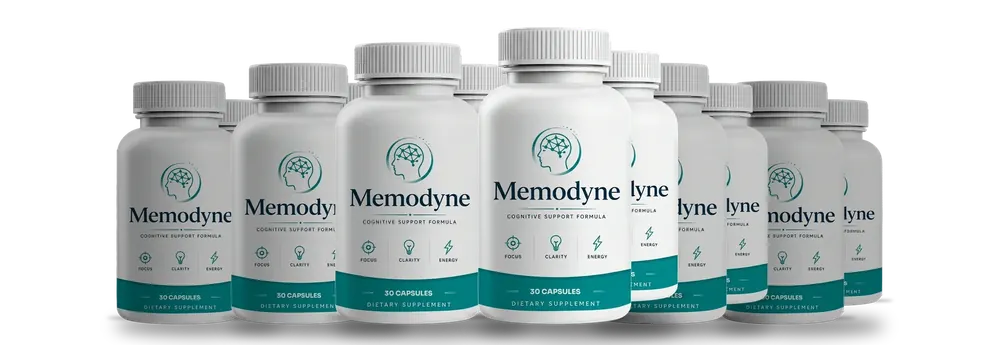
Want the lowest Memodyne price? It comes with the 6-bottle pack.
Best price: $49/bottle when you take 6 ($294). Free shipping on 3+ · 60-day money-back window · Checkout by BuyGoods.
Is nitric oxide the same as nitrous oxide or nitrate medicine?
No. The three names sound alike and get mixed up in search results all the time, but they are different things with different risks. The one link that matters for you is the medicine interaction in the last row.
| Name | What it is | Link to this capsule |
|---|---|---|
| Nitric oxide (NO) | A molecule the body makes; a vasodilator | The brand says its amino acids feed it |
| Nitrous oxide | Laughing gas | None. Not in the capsule, not made by it |
| Nitrate medicines | Prescription heart drugs such as nitroglycerin and isosorbide | Arginine and citrulline can add to their blood pressure drop |
Source for the nitrate examples: (WebMD, L-Arginine).
How do arginine and citrulline turn into nitric oxide?
Through a short chain. Citrulline mostly becomes arginine first, and some arginine then becomes nitric oxide. Each step below names the source that describes it, and the last step shows where the evidence stops.
- 1
Citrulline is swallowed
Supplements supply it as plain citrulline or as citrulline malate, per the NIH exercise fact sheet.
- 2
Kidneys make arginine
About 80% of the body’s citrulline is turned into arginine in the kidneys.
- 3
Some arginine becomes NO
Only part of it, according to the NIH fact sheet.
- 4
Vessels widen
Nitric oxide relaxes blood vessels. Blood pressure is the outcome our sources studied most.
- 5
Where the trail ends
Studies measured blood pressure, exercise and erectile function. None we found measured memory or focus.
Steps 1 to 3 come from the NIH (NIH ODS, Dietary Supplements for Exercise and Athletic Performance (health professional)). WebMD puts it in one line: your kidneys change L-citrulline into L-arginine and nitric oxide (WebMD, L-citrulline: Uses and Risks). The NIH adds a careful word: citrulline supplements might raise blood levels of nitric oxide by-products. Might, and in the blood.
What did nitric oxide studies of arginine and citrulline actually measure?
Mostly blood pressure and exercise, at doses measured in grams. The table lists each outcome, the daily amount studied and what was found, so you can see what the research is about before anyone applies it to the brain.
| Outcome | Amount studied | What was found | Source |
|---|---|---|---|
| Blood pressure (arginine) | 4 to 24 g a day for 2 to 24 weeks | Small improvements; may not be enough to manage the condition | (RxList, L-Arginine (supplement monograph)) (WebMD, L-Arginine) |
| Blood pressure (citrulline) | 3 to 9 g a day for 1 to 17 weeks | Systolic about 4 mm Hg lower; diastolic only at 6 g or more | (Avicenna J Phytomed 2019, Barkhidarian et al., L-citrulline and blood pressure meta-analysis) |
| Exercise (arginine) | 2 to 20 g a day | Little to no effect on performance | (NIH ODS, Dietary Supplements for Exercise and Athletic Performance (health professional)) |
| Exercise (citrulline) | 3 or 9 g a day, or 8 g citrulline malate | No strong support | (NIH ODS, Dietary Supplements for Exercise and Athletic Performance (health professional)) |
| Erectile function | 5 g arginine a day | Might help when the cause is physical | (RxList, L-Arginine (supplement monograph)) (Mayo Clinic, L-arginine) |
| After a heart attack | About 9 g arginine a day | No benefit; 6 deaths on arginine, none on placebo | (JAMA 2006, Schulman et al., L-arginine after heart attack (VINTAGE MI)) |
| Memory | Not set | Rated insufficient evidence to rate | (RxList, L-Arginine (supplement monograph)) |
The doses start at 2 grams, and the only memory entry is a rating that says the evidence is too thin to judge.
Why is “boosts blood flow to the brain” a leap?
Because it stacks several steps that no source has shown, one on top of the other. Here is how the brand’s wording lines up against the label and the evidence.
- Marketing only
the molecule responsible for dilating blood vessels in the brain
Sales page, about L-arginineOur sources call nitric oxide a vasodilator in general. None measured brain vessels.
- Marketing only
Each ingredient was selected for its ability to increase cerebral blood flow
Sales pageNo study of any label ingredient measured brain blood flow, at any dose.
- On the label
COGNITIVE SUPPORT FORMULA, FOCUS, CLARITY, ENERGY
Front of the bottleThis is the full claim on the label. It names no blood flow and no nitric oxide.
- Not shown
Scientific References
Sales page logo stripA row of journal and newspaper logos with no study, author or year attached.
The four gaps in the chain
- Dose: the label holds under 400 mg of arginine, while studies began at 2 g.
- Place: the NIH speaks of nitric oxide by-products in the blood, not in the brain.
- Measurement: no source we opened tracked brain blood flow after these amino acids.
- Outcome: even more blood flow would not prove better memory. Nobody tested that step either.
There is one route to brain blood flow in our sources, and it is not a capsule. The Mayo Clinic says physical activity raises blood flow to the whole body, the brain included (Mayo Clinic, Memory loss: 7 tips to improve your memory).
How much arginine and citrulline does Memodyne contain?
Less than the two label lines suggest. Arginine comes as 200 mg of base plus 200 mg of an AKG salt, and citrulline as 100 mg each of an HCl salt and a malate salt. Salts carry extra weight that is not the amino acid.
So the arginine is under one fifth of the smallest study dose, and the citrulline is about one fifteenth. The full panel is on our Memodyne Supplement Facts page, and the arginine forms are compared in citrulline vs arginine.
Which medicines should not be mixed with nitric oxide precursors?
Nitrates and sildenafil-type drugs head the list, because both already lower blood pressure. The sources below talk about arginine and citrulline in general and set no safe floor, so treat any amount as worth a question.
Every other caution, including the label’s own, is on the Memodyne side effects page.
Where does Memodyne fit if you are curious about nitric oxide?
As a small-dose capsule with a complete label and a big story around it. The nitric oxide story on the sales page goes well past what its amounts or our sources can carry.
For blood pressure, talk to your clinician; the studied doses are many times higher. For focus or memory, the evidence points elsewhere. Our post does nitric oxide help memory? covers that question on its own.
Questions about nitric oxide and the capsule
What does nitric oxide do in the body?
Our sources describe it as a vasodilator: it widens blood vessels and can increase blood flow. They do not describe a role in memory.
Is nitric oxide the same as nitrous oxide?
No. Nitrous oxide is laughing gas. Nitric oxide is a molecule the body makes, and the capsule contains neither.
What supplements make nitric oxide?
Arginine and citrulline are the usual ones, because the body turns them into nitric oxide in part. Studies used 2 g or more a day.
Does L-arginine send more blood to the brain?
No source we opened shows it. The NIH says some arginine becomes nitric oxide, a vasodilator, but no study measured brain blood flow.
Can I take a nitric oxide supplement with Viagra?
Ask your doctor first. Mayo says arginine with sildenafil may drop blood pressure too low, and WebMD warns about citrulline with ED drugs.
Does Memodyne raise nitric oxide?
Not shown. No study of Memodyne exists, and its arginine and citrulline amounts sit far below the doses used in nitric oxide research.
Is a nitric oxide booster safe after a heart attack?
Arginine is not. Mayo advises against it after a recent heart attack, and a trial at about 9 g a day saw more deaths on arginine.
Why do pre-workout products use arginine and citrulline?
For the blood flow idea. The NIH says the research does not strongly back either for exercise performance.
Page check
Written by
Compares each label amount with the doses used in published research, using NIH, FDA and Alzheimer's Association pages.
Reviewed by
Dr. Harald Hampel, MD, PhD, MD, Physician
Medical reviewer. Review date: October 13, 2026.
- Last compared with the label: October 13, 2026
- Facts come from the Supplement Facts panel and the brand pages; health lines come from the sources linked above
- Corrections go to [email protected]; our checking rules are on the standards page