Does Nitric Oxide Help Memory? What Arginine and Citrulline Can and Cannot Do
Quick answer
No source we opened shows that boosting nitric oxide with arginine or citrulline improves memory. Their studies measured blood pressure and exercise at gram doses. RxList rates arginine for memory as insufficient evidence. Mayo Clinic links physical activity, not supplements, to more blood flow to the brain.

Search for nitric oxide and the brain and you will find bold promises: sharper recall, clearer thinking, an end to brain fog. Many supplements built on arginine and citrulline lean on that idea, and so does the Memodyne sales page. We sell Memodyne, so we went looking for the evidence before repeating any of it.
This post reports what we found, including the parts that do not help our own product.
Does nitric oxide help memory?
No source we opened shows that raising nitric oxide with a supplement improves memory. The arginine and citrulline research we read is about blood pressure, exercise and erectile function, at doses of several grams a day.
Two sources mention the brain at all, and both are weak. The rest, including the NIH, Mayo Clinic and Memorial Sloan Kettering pages on arginine, do not mention memory or thinking.
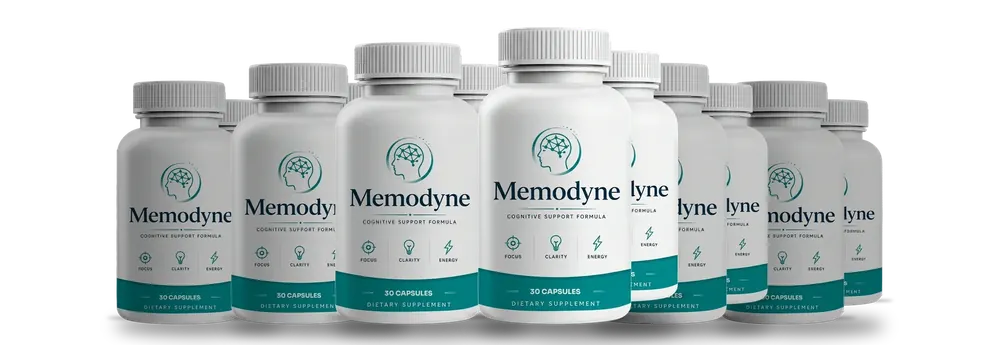
Want the lowest Memodyne price? It comes with the 6-bottle pack.
Best price: $49/bottle when you take 6 ($294). Free shipping on 3+ · 60-day money-back window · Checkout by BuyGoods.
What do the sources that mention memory actually say?
Very little, and with heavy caveats. This table lists each source we opened on arginine or citrulline and what it says about memory or the brain, word for word where it says anything.
| Source | On memory or the brain | How much weight it carries |
|---|---|---|
| (RxList, L-Arginine (supplement monograph)) | Early research suggests L-arginine might improve memory loss related to aging | Rated Insufficient Evidence to Rate; commercial site, no date or reviewer |
| (WebMD, L-citrulline: Uses and Risks) | Early human studies hint it may help Parkinson’s disease and certain dementias | No study details given; commercial publisher |
| (NIH ODS, Dietary Supplements for Exercise and Athletic Performance (health professional)) | Nothing; the arginine and citrulline sections never mention the brain | Government source |
| (Mayo Clinic, L-arginine) | Nothing on memory or thinking | Expert clinical reference |
| (Memorial Sloan Kettering, Arginine (About Herbs)) | Nothing on memory or cognition | Cancer center reference, 2022 |
So the case for memory rests on one line rated too thin to judge and one unexplained hint. Neither describes a study we could check, and neither involves amounts as small as the ones in a single capsule.
Why doesn’t more nitric oxide simply mean a better memory?
Because the claim needs every link in a long chain to hold, and only the first one has support. The track below marks each link with what our sources show.
- Shown
Arginine feeds nitric oxide
The NIH says some arginine is converted into it, and citrulline mostly becomes arginine.
- Partly
Blood levels rise
Citrulline might raise nitric oxide by-products in the blood, per the NIH. Might, at gram doses.
- Not shown
Brain vessels widen
No source we read measured blood vessels in the brain after these amino acids.
- Not shown
Brain blood flow climbs
No study of any label ingredient tracked blood flow to the brain.
- Not shown
Memory improves
No trial we found tested memory after arginine or citrulline.
Sources for the first two links: (NIH ODS, Dietary Supplements for Exercise and Athletic Performance (health professional)). For a slower walk through the biology, read our nitric oxide guide.
Can nitric oxide or citrulline clear brain fog?
We cannot find a source that says so. People search for citrulline brain fog and nitric oxide brain fog often, but none of the health pages we opened tests these amino acids for it.
The brand’s own FAQ says its mission is to help people facing memory loss, lack of focus and brain fog. That is a goal, not a finding. If foggy thinking has lasted for weeks, the NIA lists causes worth checking first, among them medicine side effects, depression or stress, and thyroid problems (NIA (Alzheimers.gov), What Is Dementia?).
Does L-arginine cross the blood-brain barrier?
Our sources do not answer this, so we will not guess. None of the arginine pages we opened discusses the blood-brain barrier, how much arginine reaches the brain, or what it does there.
That gap matters. A claim that a capsule acts on brain blood vessels should rest on a study that looked at the brain. We have not seen one for arginine, citrulline or their salts.
How do the amounts in Memodyne compare with nitric oxide research doses?
They are far smaller. One capsule lists 200 mg of arginine base and 200 mg of arginine AKG, a salt that is partly alpha-ketoglutarate, so it holds under 400 mg of arginine. The NIH exercise review covered 2 to 20 g a day (NIH ODS, Dietary Supplements for Exercise and Athletic Performance (health professional)), and RxList lists 4 to 24 g a day for blood pressure.
Citrulline comes to under 200 mg, against 3 to 9 g a day in the blood pressure trials (Avicenna J Phytomed 2019, Barkhidarian et al., L-citrulline and blood pressure meta-analysis). So even if the nitric oxide route did help memory, which no study shows, one capsule would hold a small fraction of the amounts anyone has tested for anything.
Is there any cognition trial for an ingredient in Memodyne?
One, and it is not about nitric oxide. A 2023 trial gave 100 older adults either beta-alanine or a placebo for 10 weeks (Nutrients 2023, Ostfeld et al., beta-alanine and cognition in older adults). Overall, cognitive scores did not differ between the groups.
Only a subgroup with lower starting scores improved, and a company paid for the study. Even taken at face value, it says nothing about 40 mg. Our beta-alanine page has the details.
What do the sources back for memory and blood flow to the brain?
Movement, mostly. The Mayo Clinic says physical activity raises blood flow to the whole body, including the brain, and lists it first among seven memory tips (Mayo Clinic, Memory loss: 7 tips to improve your memory). The others include sleep, mental activity, time with people and managing health conditions.
On the supplement side, the Global Council on Brain Health says scientific evidence does not support any supplement to prevent, slow, reverse or stop cognitive decline (Global Council on Brain Health (AARP), The Real Deal on Brain Health Supplements). Our memory and focus guide turns the Mayo list into a working day.
What should you check before trying a nitric oxide booster?
Your medicine list. The sources treat arginine and citrulline as active enough to clash with some drugs, even though they do not set a safe amount.
The full list of cautions is on our Memodyne side effects page.
Questions about nitric oxide and memory
Does nitric oxide help memory?
No source we opened shows it. The arginine and citrulline studies measured blood pressure and exercise, not memory.
Is L-arginine good for memory?
Not proven. RxList says early research suggests it might help age-related memory loss but rates the evidence insufficient to judge.
Is nitric oxide good for the brain?
Our sources describe it only as a vasodilator that widens blood vessels. None describes a brain benefit from supplements.
What does nitric oxide do to your brain?
The health pages we read do not say. They cover blood vessels in general, and none measured anything in the brain.
Can citrulline help with brain fog?
No source we found tests it for brain fog. WebMD mentions only an early hint about Parkinson’s and some dementias, with no details.
Do supplements that improve blood flow to the brain exist?
None is shown in our sources. Mayo links physical activity, not a pill, to more blood flow to the brain.
Does Memodyne improve memory?
No study shows it. Memodyne has never been tested as a product, and its amounts are far below the doses in any related research.
Why do brands link nitric oxide to memory?
Because the blood vessel story sounds logical. Logic is not a trial, and no trial we found closes the gap.
Page check
Written by
Compares each label amount with the doses used in published research, using NIH, FDA and Alzheimer's Association pages.
Reviewed by
Dr. Harald Hampel, MD, PhD, MD, Physician
Medical reviewer. Review date: October 13, 2026.
- Last compared with the label: October 13, 2026
- Facts come from the Supplement Facts panel and the brand pages; health lines come from the sources linked above
- Corrections go to [email protected]; our checking rules are on the standards page