Is There Any Research on Memodyne? A Fact Check of the Claims
Quick answer
No published study of the Memodyne formula exists. The brand's Scientific References strip shows logos without a study, author or year. Research on single ingredients used grams for blood pressure and exercise, not memory. This page checks each claim against the sources, one by one, and marks what is not published.

Imagine a fact-checker with a red pen and a pile of Memodyne pages. The job is not to prove the product bad. It is to ask of each claim: who said it, where is the evidence, and does the evidence fit the product on the shelf?
That is this page. We build a ledger of claims, check the logos that look like science, look at what the ingredient studies measured, and say what kind of research would change our minds. We cite only the public sources the site already uses.
Key facts
- Research on the finished Memodyne formula: not published.
- The brand's Scientific References section shows journal and newspaper logos with no study, author or year.
- Arginine and citrulline studies measured blood pressure and exercise at grams a day. Memory was not the outcome.
- The one trial of an ingredient on thinking used beta alanine at 2.4 g a day for 10 weeks and found no overall difference from placebo.
- Expert groups could not endorse any supplement for brain health, and the Alzheimer's Association says none has been proven to prevent, treat or cure the disease.
- A public lab report (certificate of analysis) for any lot: not published.
- The label claims, cognitive support, focus, clarity and energy, are structure and function wording with the FDA disclaimer printed.
Which Memodyne claims can be checked, and what did we find?
The ledger lists a claim, where it is printed and what we could confirm. Marketing only means we found no source behind it.
| Claim | Where printed | What we found |
|---|---|---|
| Cognitive support formula; focus, clarity, energy | Bottle front | On the label, with the FDA disclaimer. No study shown. |
| Directly targets the real causes of memory loss | Sales page | Marketing only. Memory loss has many causes, some treatable by a doctor. |
| Increases cerebral blood flow | Brand FAQ | Marketing only. Arginine research measured blood pressure and exercise at grams a day. |
| Scientific References | Sales page logo strip | Not shown. Logos without a study under any of them. |
| Produced in an FDA-registered facility | Brand FAQ | Not shown. No facility is named; registration is not approval. |
| All ingredients are rigorously tested | Brand safety FAQ | Not shown. No lab, method or result. |
| No significant side effects have been reported | Brand safety FAQ | Marketing only. Arginine has known clashes with blood pressure, nitrate and ED medicines. |
Six of the seven lines have no evidence we can open. The seventh, the label wording, is allowed because it describes normal function and carries the FDA statement (FDA, Structure/Function Claims).
What is the Scientific References strip on the sales page?
It is a row of journal and newspaper logos. Under none of them is a study listed. There is no title, no author and no year. One logo belongs to an obesity journal.
A logo is not a citation. A citation lets you find the paper, read the doses and see who paid for it. If a seller had a study of its capsule, it would normally name it, since that is the best selling point a supplement can have.
So we count the strip as decoration. We can say what the logos are. We cannot say what, if anything, they refer to.
What did the ingredient studies actually measure?
There is real research on single ingredients. It just answers other questions.
| Ingredient | Studied for | Dose | Why it does not carry over |
|---|---|---|---|
| Arginine | Blood pressure, exercise, angina | 4 to 24 g a day for blood pressure | One capsule holds under 400 mg |
| Citrulline | Blood pressure, exercise | 3 to 9 g a day | One capsule holds under 200 mg |
| Beta alanine | Short, hard exercise | 4 to 6 g a day | One capsule holds 40 mg |
| Beta alanine | Thinking in older adults | 2.4 g a day for 10 weeks | No overall difference; company-funded; 60 times the capsule amount |
| Niacin | Daily need; deficiency | 14 to 16 mg NE a day need | Memory appears only as a sign of severe deficiency |
Sources: (RxList, L-Arginine (supplement monograph)) (Avicenna J Phytomed 2019, Barkhidarian et al., L-citrulline and blood pressure meta-analysis) (ISSN position stand: Beta-Alanine (2015)) (Nutrients 2023, Ostfeld et al., beta-alanine and cognition in older adults) (NIH ODS, Niacin (health professional)). One drug-information source lists age-related memory loss for arginine and rates the evidence as insufficient to rate.
Notice what is common to every row. The studied dose is much larger than the capsule, and the outcome is not memory or focus. That is the gap, and it is why we say the research is real but does not speak for this product.
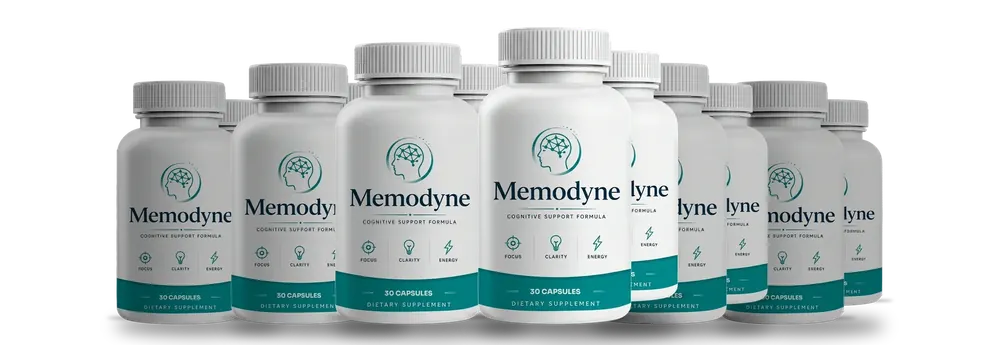
If you want to run your own small test, the order page shows the packs, the final total and the 60-day guarantee.
This site earns a commission if you order through this button. The price you pay does not change.
What do expert groups say about supplements and the brain?
The three public reviews we cite say much the same thing. The Global Council on Brain Health, convened by AARP, could not endorse any supplement for brain health, and its advice was to save your money and adopt healthy habits (Global Council on Brain Health (AARP), The Real Deal on Brain Health Supplements).
The Alzheimer's Association says no supplement has been proven to prevent, treat or cure Alzheimer's disease. The NIH's NCCIH says direct evidence that supplements prevent dementia is lacking (NCCIH, 7 Things To Know About Supplements and Alzheimer's).
None of these reviews discusses the Memodyne ingredients. They did not test them and find them wanting. The ingredients were simply never shown to work for the brain. We think it is fair to keep those two statements apart.
How do regulators treat memory claims, and what is the Prevagen case?
FTC guidance says health claims need competent and reliable science, usually randomized human trials, and that an advertiser should compare its own dose and formula with the one studied (FTC, Health Products Compliance Guidance).
One public memory case involved a different product, Prevagen, which has no link to Memodyne. The FTC and the New York Attorney General sued over its memory claims, and in December 2024 a federal court ordered the company to stop the misleading claims (FTC, Prevagen complaint (business blog)) (FTC, Statement on win against Prevagen makers).
We include it as a yardstick and nothing more. It shows what regulators expect from any brain claim: evidence that fits the dose and the formula being sold.
How can you read a study claim for yourself?
You do not need a degree. Five plain questions catch most problems.
What was studied?
The exact product, or one ingredient? A study of one ingredient says little about a mix.
At what dose?
Compare it with the label. A gap of ten times or more is a warning.
What was measured?
Blood pressure is not memory. Muscle carnosine is not focus.
Who was in it?
Older adults, athletes, patients? Healthy adults on a work day are a different group.
Who paid, and was there a placebo?
A company-funded trial with no overall effect is still a weak lead.
What research would change our view of Memodyne?
A randomized, placebo-controlled trial of the finished capsule, at the label dose, in adults like those who buy it, measuring memory or focus with a named test, and published with the methods. Even one such trial would be news.
We would also want the basics a careful buyer needs: a named manufacturer, a public certificate of analysis for a lot, and one clear refund rule. All three are not published today.
Until then, the safest wording is the plain one. No study supports the memory and focus claims, and no study contradicts them either, because none was done.
Frequently asked questions
Is there any research on Memodyne itself?
None that we could find. The sales page has a Scientific References strip of logos, but it lists no study.
Is Memodyne clinically proven?
No. We found no clinical trial of the product, and a page that calls it clinically proven belongs to a look-alike seller, not the brand.
What research exists on the ingredients?
Studies of arginine, citrulline and beta alanine at gram doses, mostly for blood pressure and exercise. None measured memory in healthy adults.
Did a study show beta alanine helps thinking?
One trial in older adults used 2.4 g a day for 10 weeks and found no overall difference from placebo. A capsule holds 40 mg.
Is the Memodyne facility FDA-registered?
The brand's FAQ says so but names no facility, so it cannot be checked. Registration would not mean FDA approval anyway.
What would count as real proof?
A published, placebo-controlled trial of the finished capsule at the label dose, measuring memory or focus. None exists today.
Our view
Our view: the fact check ends where it began. Research on single ingredients exists, and it answers other questions at much larger doses. Research on Memodyne does not exist.
That is not a verdict of failure. It is a gap, and a buyer should know it is there. Treat the label claims as marketing wording the law allows, treat the sales page as an ad, and treat your own careful log as the only data about you that matters.
Last updated October 29, 2026. Medically reviewed by Dr. Harald Hampel, MD, PhD, MD, Physician, October 16, 2026.
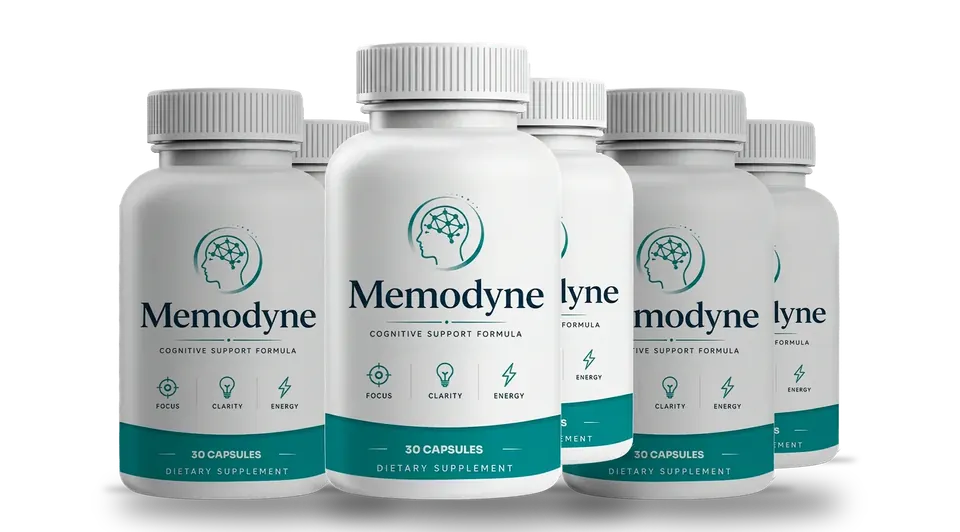
Research is missing, so the refund window is your safety net. The order page shows the guarantee in full.
This site earns a commission if you order through this button. The price you pay does not change.
Page check
Written by
Compares each label amount with the doses used in published research, using NIH, FDA and Alzheimer's Association pages.
Medically reviewed by
Dr. Harald Hampel, MD, PhD, MD, Physician
Medical reviewer. Review date: October 16, 2026.
- Last compared with the label: October 16, 2026
- Facts come from the Supplement Facts panel and the brand pages; health lines come from the sources linked above
- Corrections go to [email protected]; our checking rules are on the standards page