How Does Memodyne Work? Five Sales-Page Claims Checked One at a Time
Quick answer
The brand says Memodyne works by raising nitric oxide, widening blood vessels and sending more blood to the brain. The first steps are real biology at gram doses. The last step, a sharper mind, has no source behind it. One capsule holds under 400 mg of arginine and under 200 mg of citrulline.

Ask how a supplement works and you usually get a story. Memodyne's story has five chapters, because the brand's sales page names five benefits. Each one reads well on its own. Put together, they describe a capsule that guards the brain, speeds its signals and tunes its chemistry.
We took the chapters one by one. For each, we ask a simple thing: did anyone measure it, and at what dose? That is a fairer test than asking whether the idea sounds sensible.
Key facts
- The brand's mechanism is nitric oxide: arginine and citrulline feed it, it relaxes blood vessels, and more blood is said to reach the brain.
- The sales page names five benefits. The bottle itself names only cognitive support, focus, clarity and energy.
- Arginine and citrulline studies measured blood pressure and exercise, at 3 to 24 g a day depending on the study.
- One capsule holds under 400 mg of arginine, under 200 mg of citrulline, 40 mg of beta alanine, 7.5 mg NE of niacin and 18 mg of calcium.
- No study of the finished formula exists, and the brand's Scientific References strip shows logos without studies.
- Memodyne contains no caffeine or other stimulant, so it does not work by stimulation.
- Any effect on the brain from these amounts: not published.
How does the brand say Memodyne works in the body?
The sales page puts it in one line: the formula increases cerebral blood flow through nitric oxide precursors such as L-arginine and L-citrulline. Read slowly, that is a chain with four links.
You swallow amino acids
The capsule carries two forms of arginine and two forms of citrulline.
The body makes some nitric oxide
Some arginine becomes nitric oxide. Most citrulline is first turned into arginine in the kidneys.
Vessels relax
Nitric oxide relaxes blood vessels, so they widen.
The brain benefits
The brand implies that wider vessels in the head give a clearer, more focused mind.
The first three links are ordinary biology. About 80% of the body's citrulline is turned into arginine in the kidneys, and some arginine becomes nitric oxide (NIH ODS, Dietary Supplements for Exercise and Athletic Performance (health professional)). The fourth link is where the story leaves the evidence. No source we opened shows arginine or citrulline raising blood flow in the brain, or improving focus or memory, at any dose.
Does Memodyne enhance memory function and support cognitive health?
That is the first of the five lines on the sales page. It sounds modest, but it is a memory claim, and memory claims need memory data.
None exists for this formula. For the ingredients, one drug-information source lists age-related memory loss under arginine and rates the evidence as insufficient to rate (RxList, L-Arginine (supplement monograph)). The rest of the arginine and citrulline record is about blood pressure, angina and exercise.
The Global Council on Brain Health, an expert panel convened by AARP, could not endorse any supplement for brain health. Its advice was to save your money and adopt healthy habits (Global Council on Brain Health (AARP), The Real Deal on Brain Health Supplements).
Can Memodyne protect the brain from oxidative stress?
The second line talks about protecting the brain from oxidative stress and improving mental clarity. This is antioxidant language, yet the bottle label never uses that word.
The NIH's National Center for Complementary and Integrative Health says antioxidant supplements have not been shown to prevent disease (NCCIH, Antioxidant Supplements: What You Need To Know). Niacin, the one vitamin in the capsule, is discussed by the NIH in relation to memory only as a sign of severe deficiency.
So the claim has two problems. No source we opened describes these ingredients as antioxidants, and the general record for antioxidant pills is weak. We rate this line as marketing only.
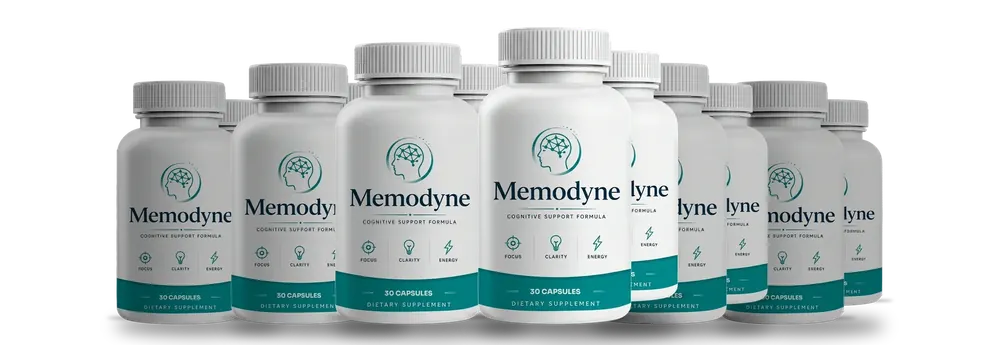
If you want to test the idea yourself, the order page shows the packs, the final total and the 60-day guarantee.
This site earns a commission if you order through this button. The price you pay does not change.
Does Memodyne boost neural communication and tune neurotransmitters?
Lines three and five promise better neural communication and optimized neurotransmitter production. These are the hardest to check, because they describe things no shopper can feel.
We looked for any source that connects arginine, citrulline, beta alanine or niacin, at label amounts, to nerve signalling or to brain chemicals. We found none.
The brand does give each ingredient a one-line job. Beta alanine, for example, is said to raise carnosine in the brain and protect neurons. The sports research on beta alanine raised carnosine in muscle, at 4 to 6 g a day (ISSN position stand: Beta-Alanine (2015)). The capsule has 40 mg.
The one trial that tested beta alanine on thinking used 2.4 g a day for 10 weeks in older adults and found no overall difference from placebo (Nutrients 2023, Ostfeld et al., beta-alanine and cognition in older adults). That is 60 times the amount in a capsule.
Can Memodyne support long-term brain health and focus?
The fourth line makes the longest promise. Long-term claims are the easiest to make and the hardest to check, since nobody has followed users of this formula for months or years.
Public bodies are cautious here. The Alzheimer's Association says no supplement has been proven to prevent, treat or cure Alzheimer's disease, and the NIH says direct evidence that supplements prevent dementia is lacking (NCCIH, 7 Things To Know About Supplements and Alzheimer's). None of those reviews tested the Memodyne ingredients and found them wanting. The ingredients were simply never shown to work for the brain.
That is a real difference. We are not saying the capsule is proven useless. We are saying nobody has shown otherwise, and a buyer should know which of those two statements is true.
How far are the label amounts from the doses that were studied?
A mechanism only matters if the dose reaches it. The table sets each label amount beside the amount researchers or health agencies used.
| Ingredient | On the label | Studied or needed | Share |
|---|---|---|---|
| Arginine (both forms) | Under 400 mg | 4 to 24 g a day for blood pressure | Under 10% of the lowest dose |
| Citrulline (both forms) | Under 200 mg | 3 to 9 g a day for blood pressure | Under 7% of the lowest dose |
| Beta alanine | 40 mg | 4 to 6 g a day for exercise | 1% of the low end |
| Niacin | 7.5 mg NE | 14 to 16 mg NE a day adult need | About half |
| Calcium | 18 mg | 1,000 to 1,200 mg a day adult need | Under 2% |
Even at gram doses, the blood pressure effects were small. A meta-analysis of citrulline trials found the top blood pressure number about 4 mm Hg lower (Avicenna J Phytomed 2019, Barkhidarian et al., L-citrulline and blood pressure meta-analysis). A capsule at a small fraction of those amounts is not a path to the brain, even if you accept the chain.
So what can Memodyne realistically do?
Three honest answers. First, it can give you a once-a-day routine, which some people find useful for building habits. Second, it can, in theory, affect blood pressure, which is why medicine cautions matter. Third, most people will notice nothing they can pin on it.
On the second point, arginine can widen blood vessels, and it may add to nitrates, sildenafil-type drugs and blood pressure medicine (Mayo Clinic, L-arginine). The label has no side effects section, so what we know comes from research on single ingredients at larger doses. Ask your doctor first if any of this applies to you.
Mayo Clinic's list of memory tips points to physical activity as the thing that raises blood flow to the whole body, brain included (Mayo Clinic, Memory loss: 7 tips to improve your memory). No pill is on that list.
Frequently asked questions
How does Memodyne work?
The brand says arginine and citrulline raise nitric oxide, which widens blood vessels and sends more blood to the brain. Only the vessel step has support, at gram doses, and nothing links it to focus or memory.
Does Memodyne work like caffeine?
No. The label lists no caffeine or other stimulant, so there is no quick lift to expect.
Does Memodyne increase blood flow to the brain?
No source we opened shows that. Arginine can lower blood pressure slightly at several grams a day, and that was measured in the body, not the brain.
Why does Memodyne use both arginine and citrulline?
Citrulline is mostly turned into arginine in the kidneys, so both feed the same pathway. The brand calls this a continuous cycle, which is its wording, not a study finding.
Has anyone tested how Memodyne works in people?
No study of the finished formula exists. The brand's Scientific References section shows logos without studies.
Is nitric oxide the same as nitrous oxide?
No. Nitric oxide is a gas the body makes in tiny amounts. Nitrous oxide is the dentist's laughing gas, and the nitrate pills used for chest pain are a third thing.
Our view
Our view is that the mechanism is a plausible story told with real words. Nitric oxide is real, and so is the effect of arginine on blood vessels at large doses. What is missing is every step that would connect a 400 mg capsule to a better mind.
If you take Memodyne, think of it as a daily habit with a small supplement attached, not as a lever on the brain. Keep the refund window in mind, keep notes, and put sleep, movement and a medicine review first.
Last updated October 29, 2026. Medically reviewed by Dr. Harald Hampel, MD, PhD, MD, Physician, October 16, 2026.
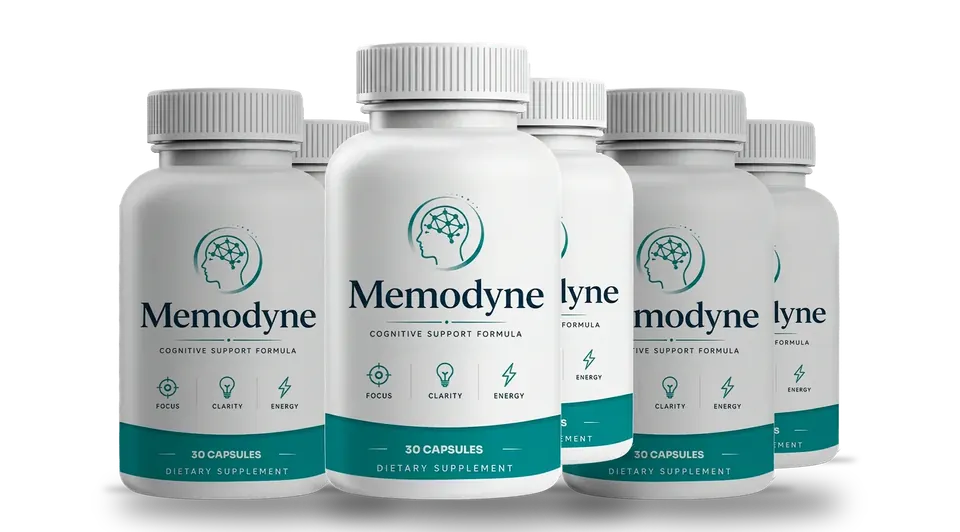
Read the label, log how you feel, and decide inside the refund window. The order page has every price and rule.
This site earns a commission if you order through this button. The price you pay does not change.
Page check
Written by
Compares each label amount with the doses used in published research, using NIH, FDA and Alzheimer's Association pages.
Medically reviewed by
Dr. Harald Hampel, MD, PhD, MD, Physician
Medical reviewer. Review date: October 16, 2026.
- Last compared with the label: October 16, 2026
- Facts come from the Supplement Facts panel and the brand pages; health lines come from the sources linked above
- Corrections go to [email protected]; our checking rules are on the standards page